
Leaders assessing provision for pupils with SEND should not overly focus on visible indicators in books, such as different work or scaffolds. Instead, they must consider whether these practices genuinely support independence and expectations. Balancing evidencing progress while ensuring quality of provision is crucial for fostering truly inclusive schools.
Author Archives: sendmattersuk
Invisible Inclusion: what does ‘good’ look like, and how do we get there?

Inclusive practice in education involves a careful balance between visible support for pupils with SEND and the subtle, often invisible strategies that foster their success. Leaders must cultivate a shared understanding of effective inclusive practice, prioritising professional curiosity and collaborative discussions to ensure all pupils meaningfully engage with the curriculum and thrive.
Is it time to redefine SEND?

Defining special educational provision as that which is ‘additional to or different from’ feels less fit-for-purpose with each passing academic year. Is it time to redefine SEND?
8 tips for SENDCOs to drive Teaching and Learning for pupils with SEND
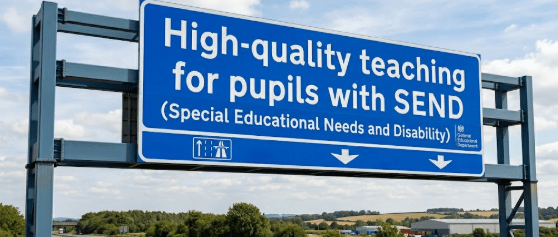
Helping teachers make the best decisions possible in how they plan, deliver and reflect on their lessons. For me, this is the closest SENDCOs get to having a ‘silver bullet’. SENDCOs’ work is multi-faceted and varied, but a prime task within that, to have maximum reach and impact, must surely be supporting teachers to developContinue reading “8 tips for SENDCOs to drive Teaching and Learning for pupils with SEND”
OFSTED’s gift to pupils with SEND? The gift of Assess-Plan-Do-Review
The new OFSTED framework emphasizes that inclusion is essential for all educational settings, advocating for the ‘graduated approach’ (assess, plan, do, review) to support students with special educational needs. For effective implementation, collaboration, and continuous reflection on practices are essential, fostering a culture that proactively addresses each student’s needs.
SEND and the Curriculum and Assessment Review – recommendations that give hope for pupils with SEND
Many elements of required SEND Reform lie outside of Curriculum and Assessment. But many also lie within it. The Final Report of the Curriculum and Assessment Review offers hopeful messages around what evolutions to our system could mean for pupils with SEND and their families. A National Curriculum for everyone An excellent curriculum widens opportunityContinue reading “SEND and the Curriculum and Assessment Review – recommendations that give hope for pupils with SEND”
What kind of SENDCO are you?

The content discusses various archetypes of Special Educational Needs Coordinators (SENDCOs): The Rescuer, The Administrator, The Friend, The Strategist, The Advocate, and The Pedagogist. Each archetype has its pros and cons, emphasizing that effective SENDCOs may embody elements from multiple roles, highlighting the complexity of their responsibilities and the importance of self-reflection for continual improvement.
6 ways to add impact to your pupil profiles
Pupil profiles are essential documents for communicating pupil needs in SEND, yet they can overwhelm teachers. To enhance their effectiveness, it is crucial to simplify language, develop systems for regular updates, and differentiate strategies into essentials and suggestions. Continuous monitoring and collaborative review ensure these profiles remain relevant and impactful.
Joyous ownership of our pupils with SEND

The responsibility for students with Special Educational Needs and Disabilities (SEND) lies with everyone in a school. While a culture of joyous ownership is necessary, it can be undermined by unrealistic demands and a focus on accountability rather than support. Positive collaboration, inclusion, and celebrating successes are essential for fostering this ownership.
EHCPs: a golden ticket…but who’s building the chocolate factory?

EHCPs are essential for supporting students with SEND, offering access to assessments and provisions. However, many families still face challenges in securing proper support, due to systemic issues like staffing and funding. EHCPs are valuable but should be part of a broader educational framework that ensures inclusive practices and effective teaching environments.

