The SEND and AP Improvement Plan: 3 things that could feel different for SENDCOs

I don’t know a SENDCO who thinks the SEND system is helping them to work efficiently, focus on the right things and consistently have impact. I don’t know many parents who speak glowingly of their experience of getting an EHCP. I don’t know any Local Authorities who aren’t consumed and overwhelmed by workload.

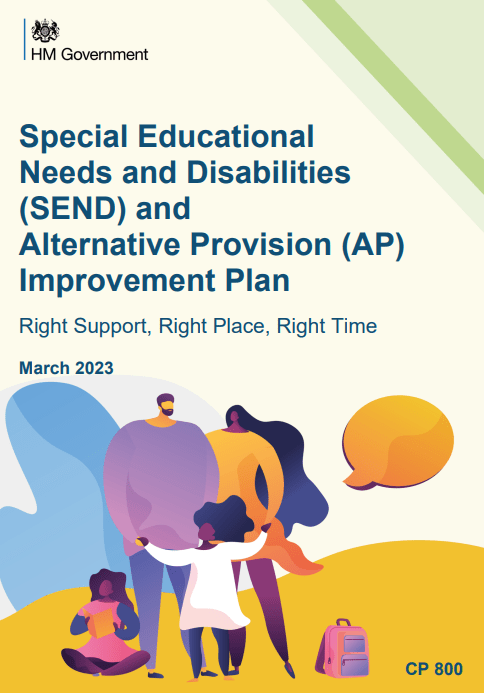
So something needs to change. But what is going to change for schools? What does the SEND and AP Improvement Plan tell us change is going to look like, and how might that change the SENDCO role?

Here are 3 ways your role could be affected.

National Standards

Many SENDCOs on Day 1 don’t yet know where to look. They may not know about some of the excellent resources from Whole School SEND, the SENsible SENCO Facebook group or the books that can guide them as they learn the role.

The answer in the Improvement Plan lies in National Standards. It looks like these will echo some of the ‘Ordinarily Available Provision’ documents set out by many local authorities (Portsmouth LA’s document is praised specifically within the Improvement Plan). Although the Improvement Plan itself raises a potential pitfall to this approach – the need to ‘find a balance between national consistency and individual needs’ – the approach at least gives new SENDCOs a starting point.

Will these National Standards be evidence-informed? The hope is certainly that they will be (the word ‘evidence’ is used 71 times in this 101-page document), with some mention of a commitment to building on the existing evidence base – for example within the area of teaching assistants.

It won’t happen quickly though. A ‘significant proportion’ of these will be published by the end of 2025, but a consultation process will follow – so nothing is going to happen quickly.

At best, this will effortlessly bring SENDCOs closer to good evidence-informed strategies and practices, helping them to make good decisions about provision quickly, and to focus on the implementation of provision.

At worst, a book’s worth of strategies will become a stick with which to beat teachers; another reason why meeting the needs of pupils with SEND feels beyond most classroom teachers.

The devil will of course be in the detail of what these end up looking like; of how they are created and what support surrounds their implementation.

A skilled workforce

If this Improvement Plan means the focus of the SENDCO role becomes more about upskilling colleagues, I’m delighted. If it helps SENDCOs to be colleague-facing, supporting colleagues directly and helping them to access high-quality development opportunities, that is a real lever for change.

The Improvement Plan gives several examples of how it sees the workforce being upskilled – through the SENCO NPQ; through a review of the ITT and ECF; through a commitment to SEND within the content of several leadership NPQs; through additional training for colleagues in Early Years; through additional research into the best practices of teaching assistants.

The sizeable hole in this plan may well be for teachers who are neither ITT/ECT nor enrolling in an NPQ. Where the offer from the Universal Services Programme (delivered by NASEN through Whole School SEND) is excellent, the multitude of pressures on teachers and school leaders mean it is still a leap of faith to think that this offer will be accessed by staff in the numbers needed to shift outcomes for many of the 1.5 million children and young people with SEND, unless there is some kind of way to ensure that staff have the time, incentive and sheer duty to do so.

A reduction in EHCPs

It would be naïve to think more requests for EHCNA won’t be rejected. There is an explicit desire within the Improvement Plan for a reduction (‘4. Fewer will therefore need to access support through an Education, Health and Care Plan’; ES15. we expect to reduce the need for EHCPs because the needs of more children and young people will be met without them).

The aspiration behind this may well be correct – that better and earlier identification, alongside a more robust plan of support through ‘ordinarily available provision’ at SEN Support Level, provides the right support quickly – negating in some cases the need for the kinds of intense and longer-term support delivered through an EHCP. It may also mean SENDCOs spend less time making requests for EHCNA and more time working with pupils, families and colleagues.

The flipside (or just the brutal reality) could be more knockbacks from local authorities, who find themselves under pressure to reduce the ‘high needs block deficits’, as is mentioned throughout the Improvement Plan (read what you will into the 12 mentions of a ‘financially sustainable’ system).

The standardisation and digitisation of EHCPs is surely to be welcomed, as any SENDCO working on a county/borough border will testify.


I am broadly in favour of the aims of the Improvement Plan. I am generally positive about many of the ways to achieve these aims. But expect nothing to change quickly. The Improvement Plan contains many references to things being trialled regionally, with pathfinders, trailblazers and pilot projects. While this approach should help to counter the problems of implementation that have plagued the 2014 SEN reforms, they also mean much-needed change may be 2-3 years down the line in many cases. Hopefully such a patient and step-by-step approach can bring good change; it just may not bring immediate change.

For a condensed version of the 101-page Improvement Plan, including specifically what it means for SENDCOs, be sure to take a look at this excellent summary from NASEN.

The Lone SENDCO: Questions and answers for the busy SENDCO

Hidden at the whole-class level

SEND has an identity crisis. Or at the very least, good teaching practice for pupils with SEND has an identity crisis. This relates to the requirement for ‘additional to and different from’.

High-quality teaching for all

On the one hand, good teaching for pupils with SEND is good teaching for all. We see this message in many places:

  • Within the Early Career Framework (and all NPQs), which takes adaptive teaching as its starting point and states the importance of ‘intervening within lessons’ and ‘adapting teaching in a responsive way’.
  • Within NASEN’s push for the needs of pupils with SEND being ‘built-in, not bolt on’; with lessons being ‘inclusive by design’.
  • Within the EEF’s evidence research in this field, which finds that the teaching approaches that favour pupils with SEND sit very much within the skill set of teachers and within many of the things they already do, or could conceivably choose to do without significant additional training.

Additional and different

On the other hand, the SEND Code of Practice defines SEND provision as being in place when pupils require something ‘additional to or different from’ high-quality teaching:

xv. special educational provision is educational or training provision that is additional to or different from that made generally for other children or young people

1.24 High quality teaching that is differentiated and personalised will meet the individual needs of the majority of children and young people. Some children and young people need educational provision that is additional to or different from this.

‘Additional to or different from’. That means inclusion should be visible. At best, this means all needs being met, whatever it takes. At worst, it represents what Nicole Dempsey accurately describes as inclusion through ‘annexes, add-ons, exceptions and afterthoughts’.

The OFSTED framework very clearly sits on the side of adaptive teaching here, both praising this approach and criticising differentiation in the same bullet point:

‘they (teachers) respond and adapt their teaching as necessary, without unnecessarily elaborate or differentiated approaches’

That said, many SENDCOs’ experience with an OFSTED inspector anecdotally involves them looking to see clearly visible differences in what pupils with SEND are getting, with the insinuation that visibly different = good practice.

So on paper at least, the Code of Practice states that pupils with SEND require different approaches; the OFSTED framework argues against differentiated approaches. With statutory compliance and the OFSTED framework arguably the 2 greatest levers affecting schools’ practice, we seem to have a problem.

This is all semantic unless it carries clear implications for what teachers are expected to do in classrooms.

Picture Teacher A. She has a diverse class, with pupils across the attainment range and with a number of pupils who are on the SEND register. She factors the needs of pupils with SEND into her planning and ensures that all aspects of her ‘high-quality teaching’ delivery have the needs of pupils with SEND in mind – built-in, not bolt-on. Everything she does – the clarity of her explanations; her targeted questions; her specific exposition that shows pupils how to learn and retain content; her well-embedded routines; her scaffolds that exist at the whole-class level; her leadership of behaviour – allow pupils with SEND to thrive. The inclusion is invisible.

As such, 3 parents book meetings with the SENDCO because they can’t see what their child’s provision is. The SENDCO takes a further 2 pupils off the SEND register because it is no longer clear that they need something ‘different from or additional to’ other pupils. The Local Authority see no evidence that the one child with an EHCP in this class is having his Section F delivered in class. The teacher’s line manager isn’t able to tick off evidence of explicit things that the teacher is doing for pupils with SEND and when OFSTED come to visit, the inspector is new to inspecting and can’t see explicit evidence of this either.

Though this represents a clear caricature of a ‘built-in’ approach to meeting the needs of pupils with SEND, the unintended consequences of the term ‘different from or additional to’ are not entirely implausible.

Sometimes of course, individual exceptions will be highly visible. Augmentative and alternative communication devices stand out as an obvious example that will always be visible.

However, we also need to accept that having high aspirations, zero stigma and maximum inclusion often means making your support of children with SEND hard to pinpoint. The sooner all policy documents align on this message, the sooner we can achieve inclusion that feels not like an add-on, but as something integral, embedded and as such often invisible; something hidden at the whole-class level.

Gary Aubin wrote The Lone SENDCO, a book of over 300 questions and answers for busy SENDCOs

References

What is the SEND system for? | Ambition Institute

Early Career Framework (publishing.service.gov.uk)

Education inspection framework (EIF) – GOV.UK (www.gov.uk)

SEND Code of Practice

SEND and schools: Inclusive by design (sec-ed.co.uk)

https://www.ascl.org.uk/ASCL/media/ASCL/Help and advice/Inclusion/Teacher-Handbook-SEND-14th-Dec-2021.pdf

Special Educational Needs in Mainstream Schools | EEF (educationendowmentfoundation.org.uk)

A signpost for SENDCOs

This is a pretty short blogpost. I’m about to publish my tenth SEND and SENDCO-related blog on another website, which I hope people here might find useful. I’ve therefore created one blogpost here, with links to the first 9.

I hope you find the hyperlinks below useful:

Effective parent partnership: three times per year and beyond

https://www.impacteducationsoftware.com/post/three-times-per-year-and-beyond-effective-parent-partnership-for-sendcos

Looking back to move forwards: how SENDCOs can continue to develop their provision

https://www.impacteducationsoftware.com/post/looking-back-to-move-forwards-how-sendcos-can-continue-to-develop-provision

SENDCOs: 9 ways the Green Paper could affect your role

https://www.impacteducationsoftware.com/post/sendcos-9-ways-the-green-paper-will-affect-your-role

Something for everyone: leading a whole-school provision

https://www.impacteducationsoftware.com/post/something-for-everyone-leading-a-whole-school-send-provision

SEND: taking timey action for accurate assessment and identification

https://www.impacteducationsoftware.com/post/send-timely-action

5 key data points for SENDCOs

https://www.impacteducationsoftware.com/post/5-key-data-points-for-sendcos

What is an annual review and what do I have to do as SENDCO?

https://www.impacteducationsoftware.com/post/what-is-an-annual-review-and-what-do-i-have-to-do

SENDCOs: Learning to Learning Walk

https://www.impacteducationsoftware.com/post/learning-to-learning-walk

Writing a great EHCP application (and why it’s actually impossible)

https://www.impacteducationsoftware.com/post/writing-a-great-ehcp-application-and-why-its-actually-impossible

The summer term SENDCO

As the days get longer and the summer term gets underway, it can feel like SENDCOs need to straddle more priorities than they have headspace for, taking on more work than they have time for. If working strategically is the only way to make this realistic, what does this look like in the summer term?

Consider these 8 areas as potential priorities for the summer term, which broadly fit into 2 categories: doing the summer term well and preparing to do next year well:

Doing the summer term well

  1. Statutory duties

For seasoned SENDCOs, this will be obvious, but it’s worth checking that every pupil with an EHCP has their annual review booked in and that every parent of a child on the SEND register will be met, as part of the duty to meet 3 times per year. I address some ways to ensure that 3-times-per-year (or more!) is realistic in a previous blog post. Remember, it doesn’t have to be the SENDCO holding all these meetings – just ‘an adult with good knowledge and understanding of the pupil who is aware of their needs and attainment’ (DfE-00205-2013, 6.67).

2. All eyes on the exams

Whether in primary or secondary, consider the upcoming exam experience for pupils with SEND. What additional support/intervention might be useful, in the weeks before exams, to close any knowledge gaps/provide additional opportunities for revision? What access arrangements are in place for pupils?

When considering exam preparation, balance messages about the importance of revision with messages about pupil wellbeing. Ensure parents are included in such messages, so they know how best to support their children.

3. Reviewing interventions

Of the additional support taking place for pupils, you should already know what measures of success look like. Make sure these measures of success get ‘assessed’, in whatever form is most appropriate – whether through looking at IEP targets, reading age, school attendance, SDQ, or through a conversation with the child/parents/staff.

4. Educational enrichment

Whole-school events are often slotted into the summer term. Get an overview of the planned trips and events and consider whether there are access issues with any of them, or indeed whether any preparation might be needed to increase access – a social story about sports day, some co-planning of the journey to a museum or ensuring steps are taken for a child to successfully attend a residential trip. Sometimes, flagging these issues to the relevant adult will be all that is needed.

Preparing to do next year well

  1. Transition

Consider the pupils entering your setting, making sure you have as comprehensive an offer as is needed – visits to your school, visits to their home, attendance at their annual review, social stories about your setting, a meeting with parents, etc.

Consider the pupils leaving your setting, as well as the pupils having a significant transition through moving key stage. Ensure your offer fully supports their transition. Where you have concerns about another school/college’s insufficient transition programme, try to raise this with them and with their parent, for the good of the child/young person. I’ve found the Going Places transition scheme to be useful for the primary-secondary transition.

2. Gained time

Some secondary teachers have a lighter teaching timetable after May half-term, due to year 11s/13s being in exams. Though this ‘gained time’ is often quickly allocated to other things (covering classes, curriculum planning, etc.), a secondary SENDCO might speak to their Headteacher about using colleagues’ gained time to get some pupils ready for next year, through some targeted academic support. A full half-term of academic intervention, delivered by a qualified teacher and delivered within a small group, might help a year 9 to cope better with the literacy demands of a Key Stage 4 curriculum.

3. Next year’s priorities

I wrote in a previous blogpost about how to write a development plan, including the steps you might take to audit your current provision. You’ll want to do a good job of considering (with data, where possible; with a range of people heard in the process, where possible) what has been achieved this year and what the next steps of progress look like. Start this process of reflection early, so you can begin to get things in place long before September 1st – especially where this involves getting buy-in from your Headteacher.

4. Staffing

This isn’t merely a question of replacing anyone who is leaving. Though that may be essential, this should also be a reflective piece of work, in which you might be asking:

  • Do the roles we have in our department still match the needs of our pupils? If someone leaves, is it a chance to replace them with someone with a slightly different skillset?
  • Of the staff who are staying with you next year, who would benefit from/is ready for development? What would this look like and what positive benefits might this bring for pupils?
  • What external recruitment is needed? Where are good places to recruit?
  • Is there enough access to specialist expertise? This may be an opportunity to look at your current spend on SEND and recruit specialists, in line with the needs of pupils (1 day per week of Speech and Language therapy, 10 days across the year of Educational Psychology, etc.)? Though this may be problematic financially, I write in The Lone SENDCO about how a range of trainees might provide additional capacity in your school, without requiring significant additional cost.

These 8 areas clearly need to be considered in the context of your school and where your SEND provision is. They’re not comprehensive, but they provide an overview of some of the things to consider before the end of the year.

Finally, remember that the summer term is long. The priorities above will need to be spread out over the term, in order to make them possible alongside the multiple unforeseeables that make the SENDCO role such a rich and challenging rollercoaster.

Gary Aubin is author of The Lone SENDCO and co-author of The Parent’s Guide to SEND.

Why everyone should want to be a SENDCO

All teachers should want to be a SENDCO. Whether for the professional development it brings, for the difference it can make to pupils who otherwise might struggle, or just to step up to a whole-school role, ambitious colleagues should view it as an essential step on their own route to leadership. Why? For plenty of reasons…

The breadth of the role

Especially at secondary, senior colleagues are often thought of as being pastoral or academic in their outlook – rarely both. The SENDCO role needs to involve pastoral care – parent meetings, work with external agencies, interventions to support a child’s emotional wellbeing – but absolutely with a central remit of improving teaching and learning. The SENDCO role may feel like it pushes someone into a professional development corner, but the opportunities and experiences it brings are broad.

The moral objective

I can’t think of any role in school that isn’t worthwhile. However, if you want a role in which you absolutely know you’re doing something worthwhile, you shouldn’t look further than the SENDCO role. National outcomes, by many measures, mean we are not yet getting SEND provision right. Statistically more likely to attend school less, get excluded more and make less progress from their starting points, students with SEND need and deserve a SENDCO who supports them to do well – and supports colleagues to get it right for them. The SENDCO role is a great reason to go to work.

A seat at the top table

The SEND Code of Practice says that a SENDCO is ‘most effective in that role if they are part of the school leadership team’. For some staff, being appointed as SENDCO can mean a fast-track to some of the highest levels of decision-making in a school.

Whole-school influence

For the career-minded, a Head of Year, Head of Phase or Head of Department role might be the middle-leadership role that begins your journey into school leadership. These provide excellent development in one area of the school. However, the SENDCO role gives you whole-school influence: across all year groups, subjects and phases.

Your own professional development

Typically, after a promotion in school (to Teaching and Learning lead, to a Head of Year/Phase/Department role), your development might involve getting a bit of internal support and a day or two attending a conference each year. Other than that, it’ll be about getting hold of some recommended reading and swotting up on the relevant DfE guidance/OFSTED messages. Compare this to all the learning that comes from being a SENDCO. What other roles come with the (statutory) opportunity to gain a postgraduate certificate, which can go towards a Masters in many cases?

The support around you

Though it’s true there can be a real lack of in-school, SEND-specific line management for SENDCOs, the team of teaching assistants can often be some of the most experienced and supportive colleagues in a school.

You’ll be a better Head

Heads have responsibility for the ‘strategic direction of SEN policy and provision’, ‘ensur(ing) that appropriate resource is provided for students with SEND’. The Headteacher Standards require Heads to ‘hold ambitious expectations for all pupils with additional and special educational needs and disabilities’. If you’re to meet your statutory duty to all pupils, SENDCO experience is a great advantage. If you can make school work for students with SEND, you can make it work for anyone.

We’ll always need SENDCOs

It’s one of only 2 roles that are statutory (that and the role of Headteacher); every school needs one. As research suggests annual SENDCO turnover of 12-14%, there will always be jobs for SENDCOs.

It’s true that I’m offering an idea of what the SENDCO role should be, rather than what it always is in reality. There are SENDCOs who are flying the flag alone, who are pigeon-holed as ‘the SEND person’ and whose professional development no one seems to care too much about. In my book The Lone SENDCO, I try to provide answers to 300 questions that SENDCOs need to know fast, to help to combat this issue where it exists.

However, there is a really pragmatic need both to make the role more desirable for current SENDCOs (protected time to do the role, etc.) and to encourage more people to want to fill the vacancies that exist, and that will continue to exist.

It’s not my experience that a SENDCO vacancy gets lots of applications, whether it’s advertised internally or externally. It’s also not my experience that there are enough colleagues who want to commit their careers to the education of pupils with SEND – ‘career SENDCOs’. We need more people to see this role as good for them to do for a short time – 2-3 years perhaps – in the absence of people going into teaching because of their passion for SEND.

We therefore need to ensure the role is desirable. While ensuring colleagues are in the SENDCO role for long enough to do it well and to bring sustainable improvements to a school, we also need to make sure the SENDCO role is seen as an essential step on the road to school leadership, in the way a Head of Year/Phase/Department role might be seen. Only that way will we have a glut of well-trained, SEND-aware school leaders who can make education work for all students, including those with SEND.

SENDCOs: 12 questions you’ll want to think about before OFSTED arrive

OFSTED last week announced that they’ll visit every school in England by summer 2025. SENDCOs will always be on the radar of a full (Section 5) OFSTED inspection, so what might inspectors ask you?

The following 12 questions link directly to all the references to SEND within the OFSTED Education Inspection Framework (EIF). Try out your answers to some of these with your line manager or a supportive colleague, so you can be as prepared as possible for the OFSTED call:

•How does your curriculum meet the needs of learners with SEND?

•What does the data say about how students with SEND are doing in your school (attendance, behaviour, progress/attainment)? What do you do with the data you collect about pupils?

•Are pupil outcomes improving as a result of the provision being made for them (including in terms of their SEND needs)?

•What steps are taken to ensure that minimal lesson time is lost for students with SEND?

•How do you identify and assess SEND in your school? How are parents involved in this process?

•What are you doing to address gaps in reading?

•How do you train and support teachers to be able to meet the needs of students with SEND?

•How do you prepare students to prepare for adulthood as they go through your school and eventually leave your school?

•How do you know that students with SEND are involved in school life?

•How do you know that learners with SEND in off-site provision are educated suitably and safely?

•How do you track the progress of students with SEND?

•Tell me about a child for whom a multiagency approach has been necessary.

It’s not possible for me to suggest answers to all of these in a blogpost. I do cover many of these topics in my book The Lone SENDCO: questions and answers for the busy SENDCO, which answers over 300 questions and covers OFSTED amongst many other topics.

That said, I’ve pasted the sections of the OFSTED EIF below, where they relate to SEND (my bold type), so you can see for yourself what they’ll be looking for evidence of. Look particularly at 353, which has the most direct relevance to SEND provision:

112. Inspectors will evaluate evidence of the impact of the curriculum, including on the most disadvantaged pupils. This includes pupils with SEND.

194. Before making the final judgement on overall effectiveness, inspectors will always consider the spiritual, moral, social and cultural development of pupils at the school, and evaluate the extent to which the school’s education provision meets different pupils’ needs, including pupils with SEND.

195. Inspectors will take a rounded view of the quality of education that a school provides to all its pupils, including the most disadvantaged pupils and pupils with SEND.

198. There is high academic/vocational/technical ambition for all pupils, and the school does not offer disadvantaged pupils or pupils with SEND a reduced curriculum.

219. Disadvantaged pupils and pupils with SEND acquire the knowledge and cultural capital they need to succeed in life.

237. Inspectors will evaluate the experience of particular individuals and groups, such as pupils for whom referrals have been made to the local authority, pupils with SEND, children looked after, those with medical needs and those with mental health needs. In order to do this, inspectors will look at the experience of a small sample of these pupils and consider the way the school is working with the multi-agency group to ensure that the child receives the support they need. For pupils with SEND, this will include ensuring that appropriate reasonable adjustments are made in accordance with the Equality Act 2010 and the SEND code of practice.

277. Inspectors must evaluate how well a school continues to take responsibility for its pupils who attend alternative or off-site provision. Inspectors need to be assured that leaders have ensured that the alternative provision is a suitable and safe placement that will meet pupils’ academic/vocational/technical needs, pastoral needs and, if appropriate, SEND needs.

353. All parts of the EIF apply to schools’ provision for pupils with SEND. However, as with all provision, SEND provision has some specific factors that should be taken into account. Inspectors will gather and evaluate evidence about:

  • whether leaders are ambitious for all pupils with SEND
  • how well leaders identify, assess and meet the needs of pupils with SEND, including when pupils with SEND are self-isolating and/or receiving remote education
  • how well leaders develop and adapt the curriculum so that it is coherently sequenced to all pupils’ needs, starting points and aspirations for the future
  • how successfully leaders involve parents, carers and, as necessary, other professionals/specialist services in deciding how best to support pupils with SEND, including agreeing the approach to remote education
  • how well leaders include pupils with SEND in all aspects of school life
  • how well the school assesses learning and development of pupils with SEND, and whether pupils’ outcomes are improving as a result of the different or additional provision being made for them, including any reasonable adjustments in remote education provision. This covers outcomes in:
    • communication and interaction
    • cognition and learning
    • physical health and development
    • social, emotional and mental health
  • how well pupils with SEND are prepared for their next steps in education, employment and training, and their adult lives, including: further/higher education and employment, independent living, participating in society and being as healthy as possible in adult life

354. Because of the often vastly different types of pupils’ needs, inspectors will not compare the outcomes achieved by pupils with SEND with those achieved by other pupils with SEND in the school, locally or nationally.

355. Pupils with SEND often have significant and complex vulnerabilities and can face additional safeguarding challenges. Inspectors will evaluate the ways in which leaders have made appropriate and effective safeguarding arrangements that reflect these additional vulnerabilities.

Seeing without observing: how to be a visible SENDCO without adding to school scrutiny

As a SENDCO, you need to know what is going on in class. You need to make sure students are receiving quality-first teaching. You need to be able to diagnose where this isn’t happening so you can support teachers to develop their practice.

You also need to do this without creating a culture of fear. Staff need to feel supported and open to change, not in fear of high-stakes observations at every turn.

To have eyes and ears on teaching and learning, without adding to the observation cycle, try some of the following:

Offer to model a strategy. Rather than criticising poor practice around (i.e.) vocabulary teaching, offer to model how vocab can be taught. A teacher seeing how you teach vocab – in context, with a carefully selected image and with opportunities for practice – will help develop colleagues’ practice without you having to highlight and correct poor practice.

Support a child in class. If you can spare an hour, this can be a great way to learn more about a child’s needs and strengths. It also allows you to see the universal and targeted provision in class and can be the catalyst for a supportive follow-up conversation with a member of staff.

See the child, not the adult. Focus your learning walks on what the child is doing, rather than what the adult is doing. For this to be genuine, any follow-up/feedback will need to reinforce this message (‘I was pleased to see our year 7s with EHCPs all engaged in their learning and receiving help to give full sentence answers’, etc.)

Hold a staff surgery. This will allow adults to come to you with what they’re finding difficult, rather than finding they are being ‘caught out’.

Get in on formal processes. Rather than creating your own formal observations that add to the levels of scrutiny in a school, get involved in whatever processes already exist – performance management observations, targeted learning walks, etc. This will also ensure that any feedback you have is integral to these processes, rather than feeling like an add-on. This will be particularly valuable where a teacher has identified SEND practice as something they are keen to develop.

Focus on the positives. People don’t mind their practice being highlighted if the feedback is positive! Whenever you see something good, offer public shout-outs in briefings or bulletins, where appropriate. CC’ing in a line manager, where praise is being given, also helps to spread positive messages.

Take the long way back to your office. By walking down a corridor you get to less frequently, you may stumble across something that becomes an excellent source of information about a child’s engagement or an adult in need of support.

Ask for volunteers. Some staff may be very happy for you to drop in frequently, to provide some coaching or feedback.

Get regular feedback from your TAs. As people likely to spend most of their day in class, ask Teaching Assistants to guide you to the teachers you can support or the areas of training you can provide.

Listen to pupils. Whether done formally or informally, students can give you an excellent steer of what is going on in classrooms, for you to then follow up accordingly in one of the ways set out above.

By implementing some of the steps above, you can maintain an excellent understanding of what is going on in classrooms, without providing additional and unwanted scrutiny for colleagues.

Gary Aubin is author of The Lone SENDCO and co-author of The Parent’s Guide to SEND

New to the SENDCO role/new to a school? Try to tick off these things by the end of September

The first term as SENDCO can feel overwhelming. It may be your first whole-school role, your first SEND-specific role, or a role that you’re trying to carry out alongside several others. It can be hard to know where to start; it can be hard to ever take stock and recognise successes.

Rather than try to master everything in the first month, this list gives 10 ideas for things to try and tick off by September 30th. Each should be manageable alongside teaching and other responsibilities; it should be broad enough to cover many elements of the role, without expecting you to master everything in just over 4 weeks.

  1. Read the Section Fs of all your EHCPs

This is statutory provision, which you must make ‘best endeavours’ to provide. You need to have read it and have plans to implement it. You might want to separate the provision into the following, to make this a manageable task:

  • Classroom strategies that teachers need to implement
  • Bespoke interventions that someone will need to deliver immediately (and others to begin once the new term is underway and new routines are embedded)
  • Strategies to implement if things aren’t going well (i.e. how to support when a child is struggling to cope in class, etc.)

You’ll need to find ways to share this information with relevant staff, where needed.

2. Communicate with all families

The Code of Practice tells us schools must meet with all parents of children with SEND at 3 points in the year (see 6.65 for the exact wording of this expectation). Though you’ll be unlikely to personally sit down with every parent/carer before the end of September, consider how you can communicate with all by this deadline.

This might just be a group text/email, letting them know how they can contact you or a relevant colleague, i.e. how they can book a parent meeting or which days you’re on the gate at the beginning of the day). This will be vital for some parents in reassuring them that their voice will be heard.

3. Drop into some classes every week

If you’re not dropping in and out of classes regularly, you’re making assumptions about the quality of teaching and learning. In as informal a manner as works for your setting, make sure you see for yourself what is going on for students with SEND in classrooms.

4. Drop in on every TA

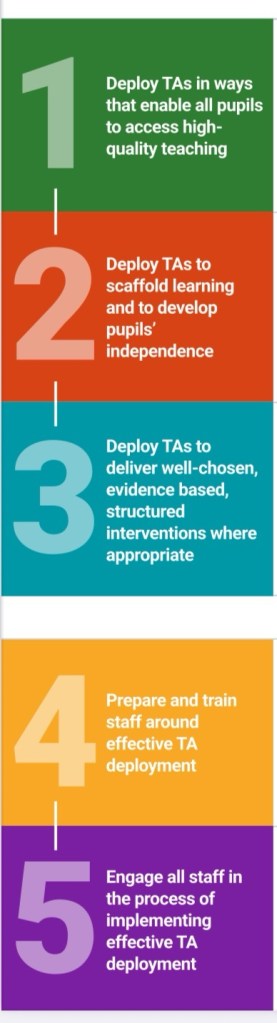
This is less likely to be a formal observation, and more likely to be a way for you just to ensure that your expectations are being met. You might be looking at how the recommendations from the EEF’s Deployment of Teaching Assistants Guidance Report are being implemented in the classroom, for example.

5. Sit down with every TA

Make sure the people you are directly line managing have a chance to share with you their hopes (and any worries) for the year ahead. Make sure you have been clear about what success looks like in your eyes, and be open to feedback about how the wider SEND provision can be developed at your school.

6. Read something brief about every child on your SEND register

It’s very easy to have a sharp focus on students with EHCPs, at the expense of those who should receive SEN Support. Become informed (or refresh your knowledge) about all students with SEND, perhaps by reading each child’s 1-page profile. This can be achieved by the end of September by focusing on 1 or 2 year groups per week.

7. Know what interventions you’re currently able to offer and get data to suggest who should begin on what

Write down the intervention offer you can currently provide. This may simply be the same interventions you ran last year; it may be a more comprehensive process of being informed by research and resourcing your department accordingly. It will need to take into account your statutory duty (see point 1, above).

For each intervention, make a note of what ‘assessment’ looks like, i.e. what evidence you have of where the child is now and that this particular intervention is appropriate for them, be it social skills, spelling or a sensory circuit.

8. Communicate with all new staff and trainee teachers

Make sure that all staff (particularly new staff) know who you are, how to contact you and how to find out information about the students they are teaching. You might even provide some training yourself, or some links to sources of further information (strategies, additional resources, etc.)

9. Find some time to learn

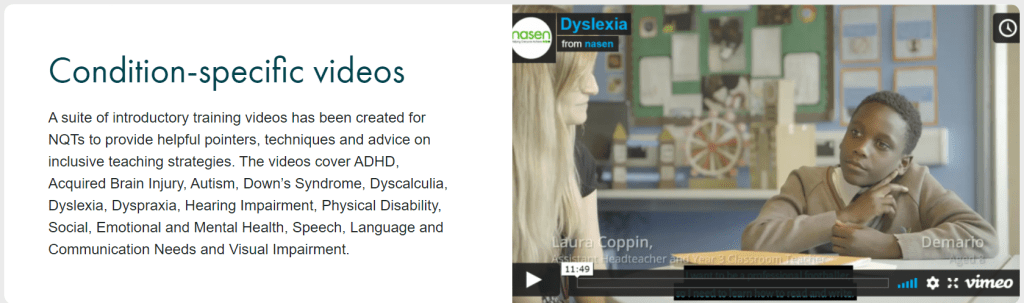
You don’t ever need to know ‘everything’. But try to prioritise some time to formally develop your knowledge further, be it through reading a chapter of David Bartram’s Great Expectations, through watching the condition-specific videos on the SEND Gateway website or through studying Chapter 6 of the SEND Code of Practice.

10. Articulate your priorities

Try to spend the month working out what needs improving. Cast the net wide to see what others think needs improving (colleagues in your department, colleagues at senior leadership level, parents or even students). Articulate this as a handful of priorities and share these with your line manager and/or the Principal. Try to also articulate what support you need in order to make progress with these priorities.

The list above will need to be considered within the context in which you are working; there will be school-specific things that just can’t wait. But I hope that, by using the above as a guide, you will be able to end September with a sense of accomplishment at all you’ve achieved in the first month.

Finally, if you look at this at the end of September and realise you haven’t ticked them all off, please forgive yourself. These are just my thoughts; I’ve almost certainly never been to your school to see your context. In addition, the SENDCO role can sometimes be very hard to plan for; very hard to remain strategic in. Allow yourself the freedom to roll things over from one month to the next, where needed.

Gary Aubin is author of The Lone SENDCO and co-author of The Parent’s Guide to SEND.

Supporting the needs of learners with SEND through remote teaching

A few tips follow on how teachers might support students with SEND through their whole-class teaching, while it is through a screen. SENDCOs may want to share some of these strategies in their communication with all teachers or adapt them for individual children. Although these tips are aimed to support the most learners possible, SENDCOs should still consider if individual workpacks, a place in keyworker school or separate 1-1 lessons with a teacher/TA will be more meaningful for children with more complex needs.

Remind students how to learn. Encourage clear desks, no mobile phones in sight and a distraction-free room. Pupils may take this advice or it might provide motivation for a parent in the room to make these changes for their child.

Provide consistency. Start by showing students a bullet pointed list or a flowchart of how the session will run.

Pre-teach vocab. Your first slide might be 3 words that students will come across in their learning, which you have prioritised for their long-term memory. Help students with these new words by providing a definition, the word type, the word being used in a sentence and an image to go alongside it.

The power of a visual. Ensure your slides are not too dense, but that they reinforce the content that students are being taught verbally. As content might be accessed on a mobile, use a large font. As usual with slides, place text on a lightly coloured background rather than on a white background.

Read aloud. Take the time to read the text on your slides out loud, clarifying key vocabulary/explaining new knowledge and pausing where needed.

Deploy your Teaching Assistant well. This will mean getting the Teaching Assistant on the call with you, then at some point putting the TA in a breakout room with the child(ren) who need(s) it, so the TA can help them with their independent practice – potentially reading or scribing, or tutoring the student(s) remotely. Breakout rooms are easy to manually create on a range of platforms.

Consider how to support attention. Keep instructions and explanations short, breaking up teacher talk frequently, i.e. where students need to hold up something they’ve written or enter something brief into the Chat.

Cold call. There should still be an expectation that all students take part, including students with SEND. Ask a question of all students, provide thinking time, then say a name and ask the child to unmute/write in the Chat.

Emphasise the power of trying and failing. More students will take the opportunity not to attempt a difficult question, knowing it might not be checked. It is important to remind students that having a go (and potentially getting something wrong) is a part of learning.

Encourage quizzing. Consider how quizzing can work – they might write their answer on a piece of paper/whiteboard and all hold it to the camera simultaneously; they might be self-marking, they might be entering their answer into the Chat or they might have to open a quiz via a Microsoft Form or a Google form. Either way, quizzing gives you feedback and forces students to engage and to complete work while on the call. Monitor those who are not responding in the Chat.

Support independent written work. Whether through your modelling, sentence starters or writing frames, support writing tasks where appropriate. This will include students having adequate silent time to complete their written work, including extra time where some students would normally have it.

Consider having students’ cameras off at times. It can be distracting for students to see each other while on the call.

Recap. End the lesson with a recap slide.

Follow up with a phone call. Where students are expected to follow up the live lesson with independent work, consider who needs additional support. This might mean a follow-up phone call; it might mean asking your SENDCO if there is a TA who could follow up, to support that child with their independent task or to consolidate the learning.

Report concerns. Where you feel a child is unable to access, doesn’t participate at all or presents with other concerns, report this to the appropriate member of staff – a Head of Year, form tutor, SENDCO or safeguarding lead as appropriate.

Finally, there is the need to be extraordinarily flexible and responsive. Just getting all students on the call, taking a register, managing their right-to-unmute, monitoring the Chat and readmitting students whose internet fails them is a substantial challenge. If teachers can manage the significant challenges of remote teaching and still apply some of the strategies above, we’ll be ensuring students with SEND can still be well-supported during strange times.

The lockdown SENDCO – how to support children and families during another school closure

Schools to close again. Lots to put in place for Headteachers, whose roles I don’t envy. But what about the SENDCO? Follow these steps, to ensure children and families can be well-supported during school closure:

  1. Be aware of the needs of your teams, and of yourself. If you have Teaching Assistants who are clinically extremely vulnerable, highly anxious, recovering from COVID or looking after family members, their deployment will need to be carefully considered at the moment. Likewise for yourself!
  2. Create your list of which children you’d like to be physically in your school. Schools are open for children of key workers and children identified as vulnerable. Following the initial lockdown in March, the Government’s definition of vulnerable was extended. As a SENDCO, you should be considering whether a place needs to be offered to students who fall under the following criteria:

This list is broad, particularly in areas with higher levels of deprivation. As a SENDCO, know who from your SEND register should be accessing the in-school provision, and invite them in accordingly (with your Headteacher’s blessing).

3. Where students have EHCPs, review and update your risk assessments. Ensure adequate steps have been taken, i.e. where there are concerns about the child remaining at home or concerns about the child being offered a provision in school safely.

4. Find out what all children in your school will be getting and reflect on this for your children with the highest needs. Whether your pupils will have live lessons, pre-recorded lessons or virtual learning, consider what amendments you should make for some of your students with need. On a sliding scale, this might involve:

  • Setting up separate sessions, led by you or a colleague, instead of mainstream lessons.
  • Ensuring a Teaching Assistant also attends the mainstream lessons, as they would in school, so they can support the child on the call and in follow-up sessions.
  • Setting up breakout rooms as part of the mainstream lessons, so that Teaching Assistants can support certain students with SEND during independent work.
  • Reminding the teacher about the needs of a particular child and how particular strategies might be adapted for online learning.

5. Look at your interventions offer. Where intervention sessions can take place remotely, they should. Think creatively about how they might be adapted, so that a child can still get support with reading, maths, handwriting, emotional regulation (or whatever they normally access) while they are at home.

6. Contact your external providers of intervention. Make sure you know how external providers that support your children (therapists, advisory teachers, family support workers) are continuing to support during school closure.

7. Create a list of children who will need check-in phone calls. Try to engage as many adults as possible in making these calls, so it is not left entirely to the SENDCO (Teaching Assistants, form tutors, Heads of Year), and work out in each case whether these will be daily or weekly. You might provide some suggested questions that colleagues could ask the children, such as:

  • What is your daily routine?
  • What are you doing to relax?
  • What are you doing that is helpful to others?
  • Which subject are you enjoying the work for?
  • Is there one subject you’re doing less work for?
  • How are others supporting you at the moment?

Work out who your colleagues making calls should feedback to, so their feedback is not lost.

8. Consider the support that parents need. How regularly should certain parents be called, either to check in on their wellbeing or to talk through some of the tasks the children have to do that day/week?

9. Ask teachers to reflect on the students whom they teach – which students do they provide the most support for in their teaching? Ask them to try and make time to phone these students, to give quick feedback, to provide reassurance and to show that these students are being kept in mind.

10. Stay in touch with pastoral teams. It’ll be important for you to be aware of pastoral issues, so you can work efficiently and deal with issues quickly – perhaps by offering a place in your in-school provision, contacting the parent or child more regularly or providing additional academic or emotional support.

Most of all, make sure you are aware and in the loop of whole-school systems. Sit in on some remote lessons, get feedback from as many people as possible and remember the power of one check-in phone call for a child or family who feel isolated.